Siya addresses the issue of conflicts in Burkina Faso that arise because different ethnic groups have different social status. Massa urges people to remain true to themselves, their families and their ethnic groups and not to hide their origins. It is about pride and resistance to discrimination. ‘Respect who you are and where you come from,’ sings Massa. ‘Those who know where they come from know where they are going.’
Tugan describes in the Bambara language a state in which someone finds themselves when they are not in their homeland. The song tells the story of a young man who one day sets off on a journey to a foreign land to find a better life for himself and his family. ‘Tugan’ is about the challenges of this journey, the blessings of his parents, the good people who help him, and those who wish him ill. It is about how difficult it is to find a place to sleep, something to eat, or even residence permits.
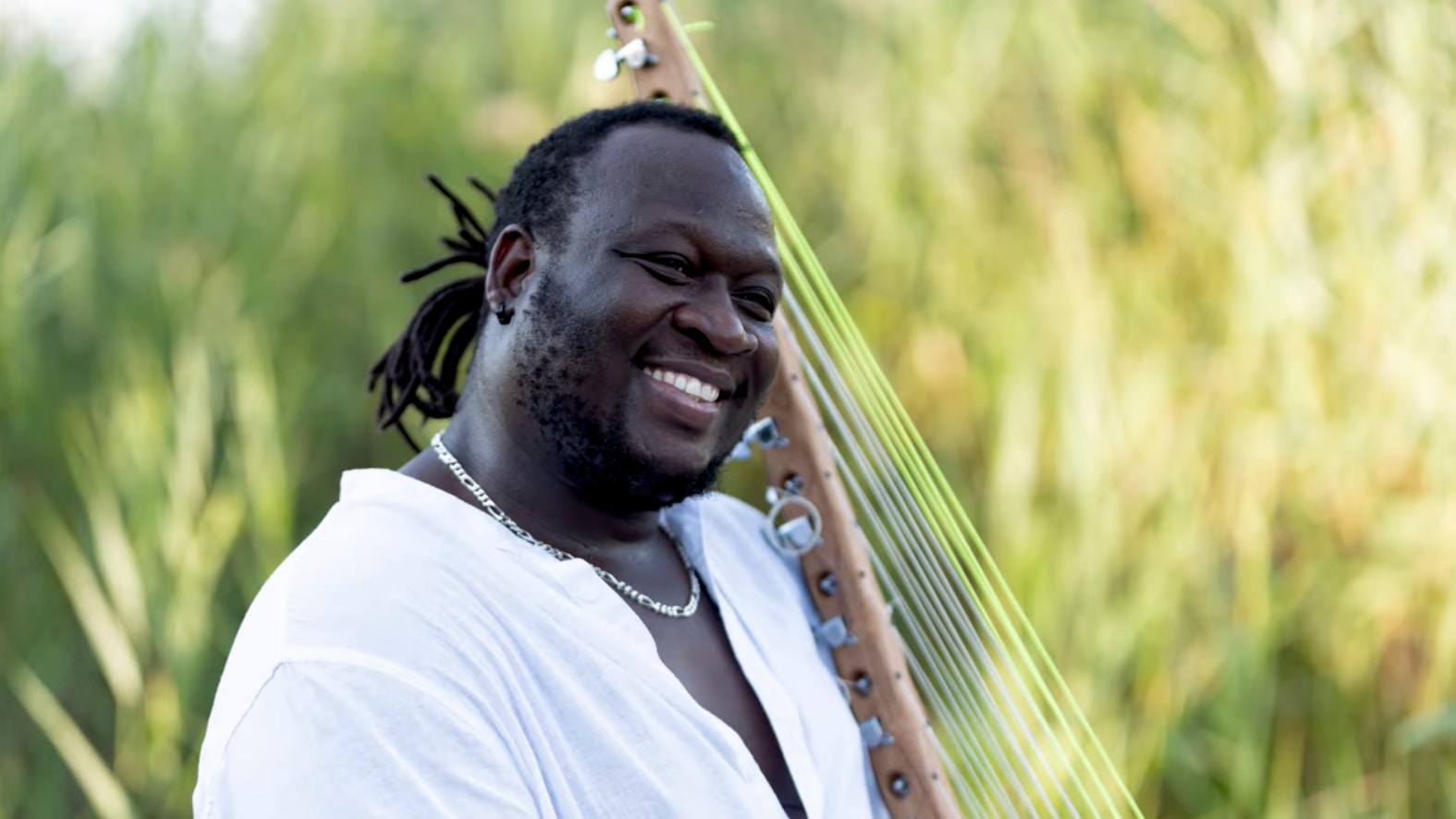
Falatô is Massas third album – and his first with a large band line-up. Drums, bass, guitar, shimmering synthesizer solos, crisp brass and, above all, the voice and camel N’Goni of Massa Dembele: ‘Falatô’, recorded in Bobo-Dioulasso, Burkina Faso, with local musicians, is Afrobeat and jazz, West African soul, desert blues and griot music. The album sounds like Fela Kuti, like Ali Farka Touré, and at the same time it sounds unmistakably like Massa Dembele – the throaty, powerful voice, the hypnotic harp cascades of his N’Goni.